
retroELOnews / Transmisiones HERE IS THE NEWS
La canción “HERE IS THE NEWS” que forma parte del álbum TIME de ELECTRIC LIGHT ORCHESTRA lanzado en el año 1981, incluye una voz de fondo debajo de la música que simula un boletín informativo futurista y que, curiosamente, no fue una simulación total hecha en estudio, sino que JEFF LYNNE utilizó la voz real de un locutor de radio estadounidense. Lo interesante es que la voz del locutor que se puede escuchar no fue grabada por un actor o miembro de la banda, sino por un locutor real de la American Forces Network (AFN), una red de radio dirigida por el ejército estadounidense para sus tropas en el extranjero. Una emisora militar que operaba en Múnich (Alemania Occidental), cerca de los Musicland Studios, donde ELO grababa en esa época.
La AFN, una emisora que operó desde 1945 hasta 1992, y era famosa entre los músicos que trabajaban en Musicland -productores como Giorgio Moroder o bandas como Queen, Led Zeppelin y ELO– porque sus emisiones podían oírse con nitidez en la radio del estudio. Muchos ingenieros y músicos las usaban como referencia o incluso para grabar fragmentos de sonido. Esta emisora también estaba en Múnich, lo que facilitó la colaboración. Estaba tan cerca que solo se necesitaban unos 10 minutos en coche para llegar desde Musicland a las instalaciones de AFN.
Aunque nunca se ha confirmado oficialmente el nombre del locutor, los testimonios de técnicos y coleccionistas apuntan a que JEFF LYNNE, ayudado por MACK, tomó la voz directamente de una grabación real o de una cinta de AFN Munich, y luego la procesó con filtros, reverb y delays para darle ese tono “retro-futurista”, como si fuera una emisión de noticias desde el futuro.
JEFF tenía gran obsesión por los sonidos de radio (ya lo había mostrado en “TELEPHONE LINE” o “THE DIARY OF HORACE WIMP”) y en TIME los llevó a su máxima expresión. buscaba una atmósfera auténtica y futurista para el álbum Time, que gira en torno a un viaje temporal al año 2095. Incluir una voz de noticiero real ayudó a reforzar esa ambientación distópica y tecnológica. La voz del locutor aporta un tono serio y creíble, como si realmente estuviéramos escuchando noticias en un mundo futuro. La textura de “HERE IS THE NEWS” -con noticias absurdas, pregrabadas y fragmentadas- encaja perfectamente con la idea de un futuro saturado de información y despersonalización mediática.
Finalmente se cree que una de las opciones fue que se grabó directamente un fragmento de la emisión de AFN (o una rebobina) en la que un locutor hace un anuncio, y luego se procesó en estudio. Otra opción sería, que se solicitó al locutor que hiciera una grabación, o se usó una cinta de archivo, para que la banda la incorporara en la pista. En cualquiera de los dos casos, tras la grabación se aplicaron efectos de estudio (eco, reverb, quizá cambio de velocidad o filtrado) para que sonara “del futuro” o “distorsionada” como transmisión lejana. Después, la grabación se montó en el tema, entre orquestaciones, sintetizadores y voces, para crear la sensación de “noticiero del futuro”.
No hemos encontrado confirmación oficial (por parte de JEFF LYNNE o del sello discográfico) del nombre del locutor de AFN que se usó. Aunque la base de datos de LYNNE indica “voz procedente de AFN Munich”, no se especifican detalles de la fecha de grabación, la emisora exacta o la persona concreta.
Nombres de locutores de AFN Munich aparecen en memorias y listas de personal (ej.: locutores históricos de AFN; también figuras como Fritz Egner trabajaron en AFN en los 70 y pueden aparecer en archivos). No obstante, no hay confirmación pública de que Fritz Egner, Richard Real, Pat Martin o Rick Francis sean la voz en la canción; esos nombres aparecen en discusiones y recuerdos, no en una fuente oficial que los vincule al tema, aunque quizá fue uno de ellos.
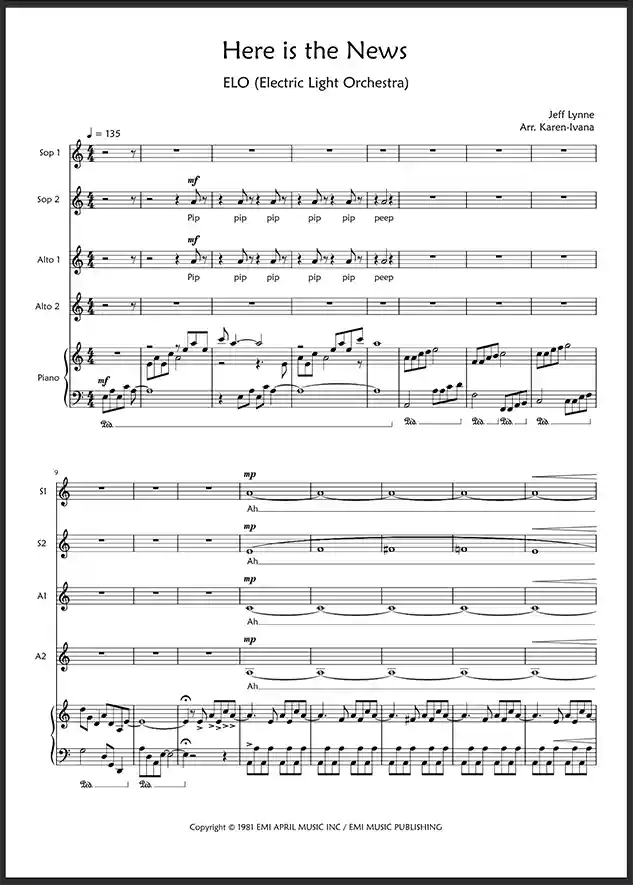

ELOSPAIN:
The song “HERE IS THE NEWS”, which is part of ELECTRIC LIGHT ORCHESTRA’s album TIME, released in 1981, includes a background voice beneath the music that simulates a futuristic news bulletin. Interestingly, this was not a complete studio simulation, as JEFF LYNNE used the real voice of an American radio announcer. What makes it particularly intriguing is that the announcer’s voice heard on the track was not recorded by an actor or a member of the band, but by a real broadcaster from the American Forces Network (AFN), a radio network run by the U.S. military for its troops overseas. This military station operated in Munich (West Germany), close to Musicland Studios, where ELO were recording at the time.
AFN, a broadcaster that operated from 1945 until 1992, was well known among musicians working at Musicland—producers such as Giorgio Moroder or bands like Queen, Led Zeppelin and ELO—because its broadcasts could be received clearly on the studio radio. Many engineers and musicians used it as a reference or even recorded sound fragments from it. The station’s location in Munich made collaboration easy, as it was only about a ten-minute drive from Musicland to the AFN facilities.
Although the announcer’s name has never been officially confirmed, accounts from technicians and collectors suggest that JEFF LYNNE, with the help of MACK, took the voice directly from a real recording or tape from AFN Munich, and then processed it with filters, reverb and delays to give it that “retro-futuristic” tone, as if it were a news broadcast from the future.
JEFF had a strong obsession with radio sounds (something already evident in “TELEPHONE LINE” or “THE DIARY OF HORACE WIMP”), and on Time he took this concept to its fullest expression. He was seeking an authentic and futuristic atmosphere for the album Time, which revolves around a journey to the year 2095. Including a real newsreader’s voice helped reinforce that dystopian and technological setting. The announcer’s voice adds a serious and believable tone, as if we were genuinely listening to news from a future world. The texture of “HERE IS THE NEWS”—with absurd, prerecorded and fragmented news items—fits perfectly with the idea of a future saturated with information and media depersonalization.
Finally, it is believed that one option was that a fragment of an actual AFN broadcast (or a tape replay) was recorded, in which an announcer delivers a news item, and then processed in the studio. Another possibility is that the announcer was asked to make a recording, or that an archive tape was used, which the band then incorporated into the track. In either case, after recording, studio effects were applied (echo, reverb, perhaps speed changes or filtering) to make it sound “from the future” or “distorted,” like a distant transmission. The recording was then edited into the song, alongside orchestrations, synthesizers and vocals, to create the sensation of a “news bulletin from the future.”
I have not found any official confirmation (from JEFF LYNNE or the record label) of the name of the AFN announcer whose voice was used. Although Lynne-related databases indicate “voice sourced from AFN Munich,” no details are given regarding the recording date, the exact station, or the individual involved.
Names of AFN Munich announcers appear in memoirs and staff lists (for example, historical AFN broadcasters; figures such as Fritz Egner also worked at AFN in the 1970s and appear in archives). However, there is no public confirmation that Fritz Egner, Richard Real, Pat Martin or Rick Francis are the voice on the song; these names appear in discussions and recollections, not in any official source directly linking them to the track—although it may well have been one of them.



Hola. Dos noticias referidas al universo ELO. Una buena y otra mala.
La buena: un grupo llamado Rikas ha hecho una versión de Last train to London muy similar a la original.
Y la mala: ha desaparecido por completo toda la discografía de Traveling Wildburys de Spotify. Misterio.
Qué recuerdos, gracias a esta canción, saqué buena nota en un examen de inglés en tercero de BUP, al preguntarme cómo se escribía «Aquí están las noticias» en inglés, y fui el único que la contestó correctamente. La profesora me preguntó como sabía que se escribía en singular, y yo le dije que lo sabía gracias a la canción de ELO.