Mis respetos, Mr. Lynne / Lorenzo Silva
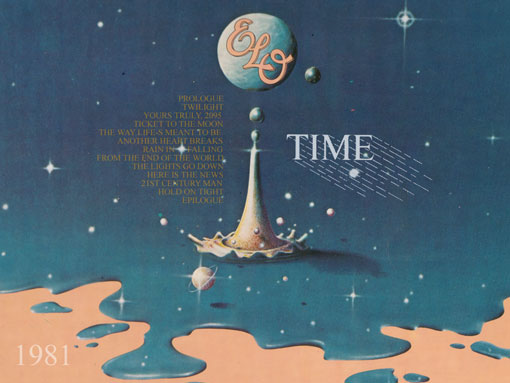
«La vida es otra cosa» es el último libro editado el 31 de enero de 2024 del escritor Lorenzo Silva, donde podemos encontrar en su interior, una curiosa e inesperada pieza narrativa muy especial dedicada a ELECTRIC LIGHT ORCHESTRA, y más concretamente a su líder JEFF LYNNE bajo el título «Mis respetos, Mr. Lynne» que ocupa dos páginas del mismo. En él se atreve a desmenuzar, a su modo de ver, «Yours Truly, 2095» y «21st Century Man». algo no tan fácil como pueda parecer para cualquier ser vivo y que hace con más o menos acierto, según interpretaciones…

La mirada de Lorenzo Silva a los dos años más convulsos de nuestra historia reciente y que han transformado el mundo tal y como lo conocíamos.
Este libro cierra un ciclo de observación literaria y periodística de Lorenzo Silva a la historia de lo que llevamos vivido del nuevo siglo. Después de Donde uno cae, en el que se reúne la mirada del escritor a la segunda década del siglo XXI, el presente volumen la fija en los dos últimos años que han marcado el arranque de la tercera década (primavera del 2019 – otoño de 2021).
En estas piezas narrativas, Silva reflexiona sobre los refugiados por el hambre y la guerra, los populismos en Occidente, la crispación de la política española, la exhumación de Franco del Valle de los Caídos, sobre un tiempo marcado por la COVID-19 y, finalmente, nos habla de la desesperanza, el horror, el caos y de la responsabilidad mundial de un revés anunciado: la toma de Kabul por parte de los talibanes.
Un retrato veraz y crudo de todo lo ocurrido y de cómo los hechos acontecidos nos han cambiado para siempre.

ELOSPAIN:
“Life Is Something Else” is the latest book by Lorenzo Silva, published on January 31, 2024. Inside, we find a curious and unexpected narrative piece dedicated to Electric Light Orchestra, and more specifically to its leader Jeff Lynne, titled “My Respects, Mr. Lynne”, which spans two pages. In it, Silva ventures to dissect, from his own perspective, Yours Truly, 2095 and 21st Century Man—no easy task for anyone—and does so with varying degrees of success, depending on interpretation.
The book reflects Silva’s view of the two most turbulent years in our recent history, which have transformed the world as we knew it.
This volume closes a cycle of literary and journalistic observation by Lorenzo Silva on the history of the early 21st century. Following Donde uno cae, which gathers his reflections on the second decade of the century, this book focuses on the last two years that marked the beginning of the third decade (spring 2019 – autumn 2021).
In these narrative pieces, Silva reflects on refugees driven by hunger and war, the rise of populism in the West, the tension in Spanish politics, the exhumation of Franco from the Valley of the Fallen, a period marked by COVID-19, and finally addresses despair, horror, chaos, and global responsibility in the face of a foreseen turning point: the takeover of Kabul by the Taliban.
A truthful and raw portrait of everything that happened—and how those events have changed us forever.

Transcription (English):
My respects, Mr. Lynne
“I had a teacher…” With these beautiful and evocative words begins, in an extreme close-up of an aged and heavy Gérard Depardieu, the film Tous les matins du monde by Alain Corneau. They are the words that come to mind as I open these lines. I too had a teacher at that precise stage in life recalled by the protagonist—adolescence—when the lessons that allow a man—or a woman—to distinguish—or not—truth from falsehood, treasure from junk, what must be done from what should be avoided, are imprinted on the mind and the heart.
My teacher, astonishingly, was my own age, yet far ahead of me in intuition. I have needed to circle the sun forty times to realize to what extent, and to be grateful to my memory for preserving the trace of his ideas—sometimes strange and disconcerting—which today take on a meaning I did not always grasp back then. I could give many examples, but there is one recent one that serves to illustrate it.
It was just yesterday, driving alone at night along a deserted ring road in Madrid—the outermost of all. To relax my mind after an intense work week that, by that late hour on Saturday, I could finally consider over, I decided to play some music, and it turned out that in the car’s CD player was Time by Electric Light Orchestra, which in those now distant days had been the favorite album of my friend and teacher.
At the time, it seemed to me a questionable choice: ELO, I thought, were lightweight musicians, nothing compared to Pink Floyd, and less brilliant than Supertramp when it came to making pop. They didn’t have a song like Wish You Were Here or Hide in Your Shell, for example. And that album seemed weak to me among theirs, inferior, without going any further, to Out of the Blue.
And yet, after many years, I ended up buying the CD—out of nostalgia, I suppose—and from time to time, that’s why I kept it in the car, I enjoyed listening to it. Until last night. Because last night, for the first time, I truly paid attention to the lyrics of two of its songs: Yours Truly, 2095 and 21st Century Man. And I am still shaken.
It is worth noting: Time, the album that includes these two songs, was released in 1981—forty years ago now. And in Yours Truly, 2095, there is talk of a lover programmed to be very kind, yet cold as ice; who keeps telling you she likes you but slips away when you try to touch her; who is the latest in technology, almost mythical, yet has a heart of stone; whose IQ is a thousand and one, who wears a jumpsuit and… is also a telephone. Many years before Steve Jobs conceived the idea, Jeff Lynne—singer, leader, and songwriter of ELO—was already envisioning the iPhone and its copies: the window through which millions of people now peer into a virtual reality in a desperate search for approval.
No less chilling was decoding, four decades later, that other futuristic song, 21st Century Man, dedicated to someone who is a hero one day and a clown the next; who should be happy and content while flying on the wheels of tomorrow, yet wanders through the fields of his bitterness and feels alone, in a life that is not what he thought it would be. As if that were not enough, Lynne also foresees here the culture of cancellation that, from one day to the next, casts into the mud and ridicule those who once stood on pedestals—the infinite emptiness of human beings who have bought into the illusion of instant pleasure in our era.
Many have tried to anticipate the future, to abolish the illusion of time that separates us from it; few have managed to define its contours as precisely as Lynne does here. My respects to him—and my gratitude to the one who saw it before I did, my friend and teacher Carlos Soto, from whom I continue to learn.